Instant Connect

Scan to connect via WhatsApp or WeChat
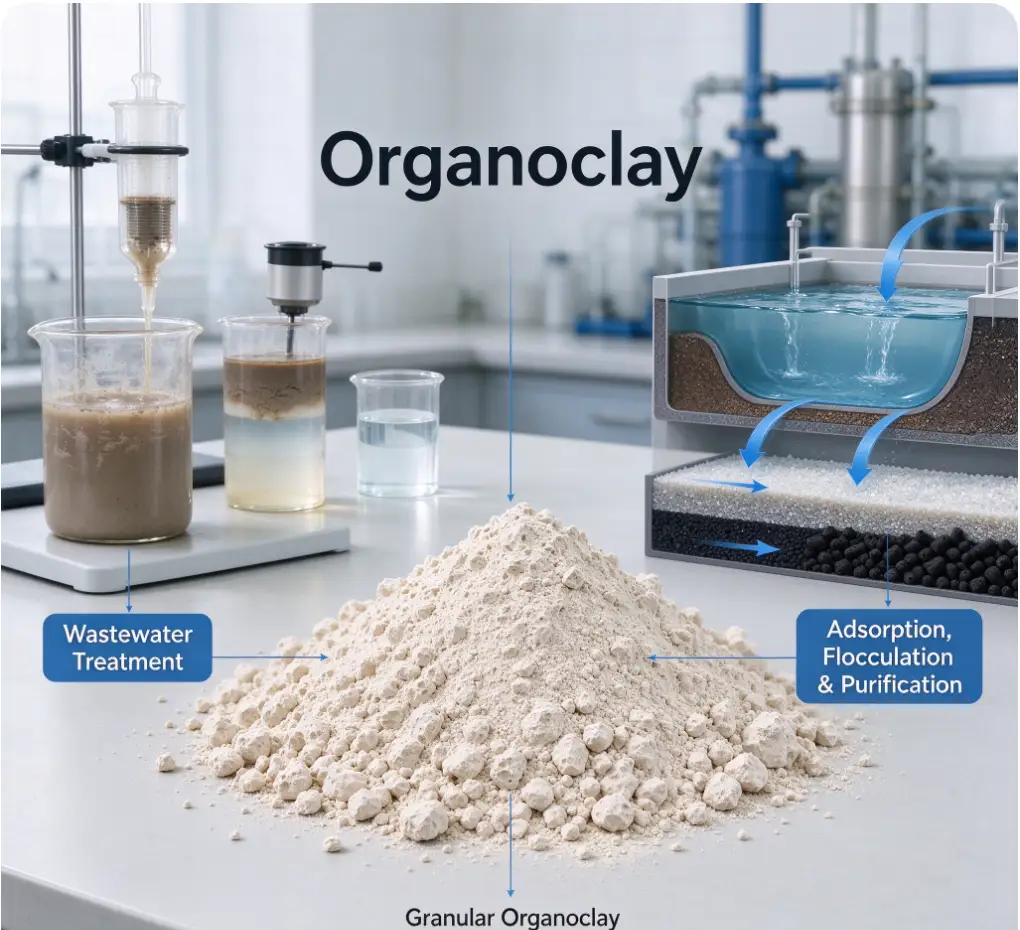
CP-200 is a proprietary granular organoclay media for treating water and environmental applications involving organic contaminants, particularly non-aqueous phase liquids (NAPLs), dissolved PAHs and PCBs. It is supplied as 600–1850 μm granules for filtration, permeable reactive barriers and other remediation configurations.
For a technical review, share the source water, target contaminants and concentrations, flow rate, treatment configuration and discharge or cleanup objectives. Request the current CP-200 TDS, SDS, batch COA or a sample.
| Property | Typical value | Notes |
|---|---|---|
| Product form | Granular organoclay media | Visual |
| Bulk density | 0.73–0.83 g/mL | As supplied |
| Loss on ignition | 27–35% | Test method not specified in supplied sheet |
| Moisture content | ≤5% | Test method not specified in supplied sheet |
| Particle size | 600–1850 μm; ≥95% | As reported in supplied sheet |
| Oil adsorption | ≥0.5 g/g | Confirm test method for specification use |
| Hydraulic conductivity | ≥0.001 cm/s | Confirm test method and design relevance |
Values above are transcribed from the supplied CP-200 product sheet. They are typical product data, not guaranteed treatment outcomes. Confirm current limits, test methods and lot values in the applicable TDS and batch COA.
| Application | Role of the granular media | Project details to verify |
|---|---|---|
| Groundwater and leachate filtration | Flow-through organophilic filtration media | Influent composition, flow, contact time, head loss and change-out criteria |
| Permeable reactive barrier (PRB) | Reactive media in a groundwater flow path | Site hydrogeology, plume chemistry, residence time and hydraulic design |
| Subaqueous contaminated-sediment capping | Bulk cap material for chemical isolation of NAPL seeps | Site conditions, placement method, cap design and long-term monitoring |
| Solidification/stabilization mixes | Additive in pozzolanic mixes to adsorb NAPL and low-solubility organics | Mix design, hydraulic performance and leachability testing |
| Oil-contaminated water and steam condensates | Standalone treatment media as described in the product sheet | Water chemistry, contaminant loading, flow rate and treated-water criteria |
The supplied product sheet does not give a universal dosage, bed depth, service life or removal percentage. Request project-specific guidance rather than applying a generic design value. See our water treatment application guide and organoclay adsorption overview for broader system context.
| Item | Supplied information |
|---|---|
| Standard packaging | 25 kg bags |
| Bag options | Kraft paper bag or kraft composite bag with PE inner liner |
| Customized packaging | Available by arrangement |
| Safety information | Consult the current CP-200 SDS/MSDS before handling and use |
The supplied document does not state shelf life or delivery lead time. Confirm the current packaging, storage, shelf-life and shipment details when requesting a quotation.
Read the water treatment application guide, explore the adsorption and remediation overview, or browse the complete organoclay product index. For project qualification, contact our technical team with your site-water data and treatment design basis.
Related pages: Water Treatment · Organoclay Adsorption · Product Index · Request TDS and Sample
Send your target contaminants, source-water analysis, flow rate and treatment configuration. Our technical team can provide current CP-200 documents and help define a representative qualification trial.
We reply within 24 hours on business days.
Thank you! Your inquiry has been received.
We'll get back to you within 24 hours.
WeChat ID
0086-13185071071