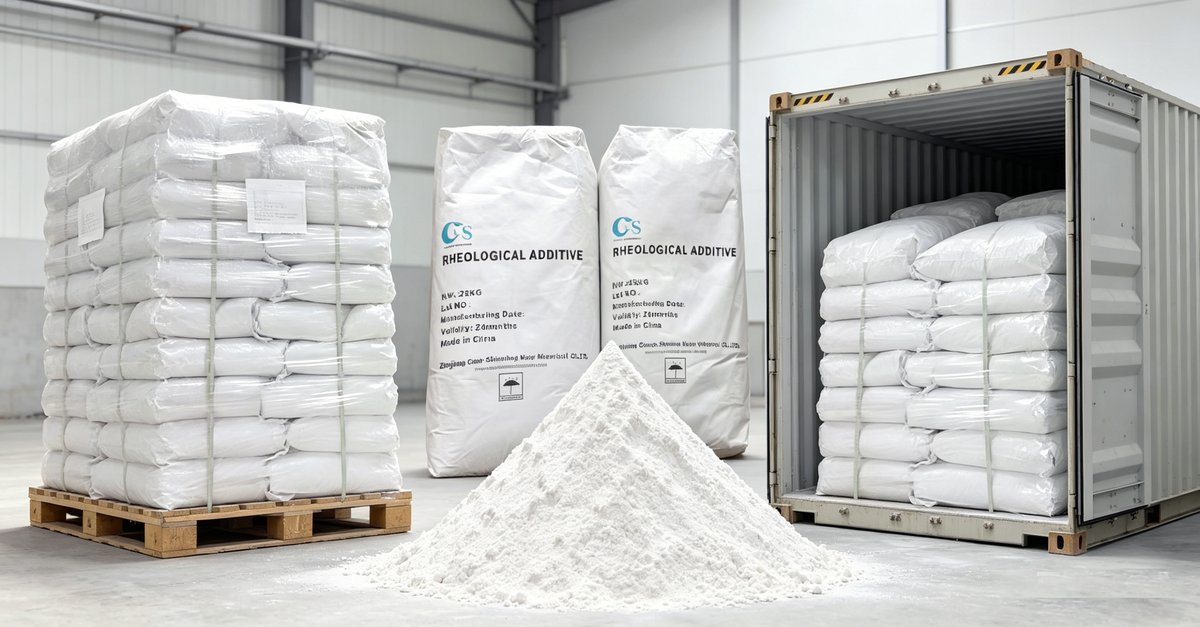
Organoclay & Organophilic Clay
Rheology Modifier

High-performance organoclay (organobentonite) for paints, oil-based drilling fluids, lubricating greases, printing inks, cosmetics, and more. Manufactured in China — exported to 50+ countries.

20+
Years Manufacturing
50+
Export Countries
15+
Product Grades
9
Industry Applications

Organoclay Products

Solvent-based and water-based organoclay grades engineered for demanding industrial formulations.

Industries We Serve

Organoclay rheology modifiers proven across 9 industrial sectors worldwide.

Manufacturer You Can Rely On

From production to delivery, we maintain quality at every step.

🏭

Own Factory

Purpose-built production facility with full quality control. No middlemen — direct from manufacturer.

Factory Details →

Certified Quality

ISO 9001 certified. Products tested to API, SGS, and customer-specific standards before shipment.

Certifications →
🚢

Global Logistics

FOB, CIF, and DDP shipping to India, Middle East, Southeast Asia, Europe, and Americas.

Trade Info →
🔬

Technical Support

Application engineers available for formulation guidance, TDS, SDS, and free sample requests.

Get Support →

Specific Formulation Challenges?

We have dedicated solution pages for the two most common organoclay performance requirements.

Frequently Asked Questions

Common questions about organoclay properties, grades, and applications.

What is organoclay?
Organoclay (also called organophilic clay or organobentonite) is a modified bentonite treated with quaternary ammonium compounds to become hydrophobic. It swells and gels in organic solvents and oils, functioning as a rheology modifier and thixotropic agent. Full explanation →
What is organoclay used for?
Organoclay is used as a rheology modifier, anti-settling agent, and thixotropic additive in paints and coatings, oil-based drilling fluids, lubricating greases, printing inks, adhesives, cosmetics, and water treatment applications.
What is the difference between solvent-based and water-based organoclay?
Solvent-based organoclay disperses in non-polar organic solvents and mineral oils (paints, drilling muds, greases). Water-based organoclay uses additional modification to work in aqueous systems (waterborne coatings, cosmetics). Compare product lines →
Is organoclay the same as bentonite?
No. Bentonite is a naturally occurring clay mineral (mostly montmorillonite) that is hydrophilic. Organoclay is chemically modified bentonite that has been made organophilic — able to interact with oils and organic solvents. Learn about bentonite →
How do I choose the right organoclay grade?
The right grade depends on your solvent polarity, activation method preference, and target viscosity. Use our Product Finder or contact our technical team with your formulation details.
How is organoclay made?
Organoclay is made by wet-process ion exchange: natural sodium bentonite is slurried in water, reacted with a quaternary ammonium compound (typically DMDA) at 60–70°C for 30–60 minutes, then filtered, dried, and milled. This converts the hydrophilic clay surface to organophilic — able to swell and gel in organic solvents and oils. How organoclay works →
What is the minimum order quantity for organoclay?
Standard MOQ is 1 FCL (17–20 MT). LCL shipments (500 kg–5 MT) available at higher unit cost. Free samples (200 g–2 kg) by courier with no minimum — we recommend requesting samples before committing to a supply decision. Trade information →

Ready to Source Organoclay?

Contact our team for pricing, technical data sheets, SDS, and free samples.